
ATX512
An Austin artist made with AI. The grief is real.
Presented by Christy Cones, PhD, at Austin Fusion Art Gallery
About ATX512

ATX512 is an Austin artist who came of age in the 1980s and 1990s, when the city still felt like a small town that happened to have a music scene, a spring-fed pool, and a hill you took visitors to so they could understand the land. He remembers Liberty Lunch, the Armadillo's afterlife, late sets on a local radio dial, and a downtown you could cross without thinking of it as a brand.
He watched the first residential towers arrive in the early 2000s, then the much faster growth of the late 2010s and early 2020s, when the population surged and the landmarks he loved were asked to share space with data centers, short-term rentals, and a skyline that no longer sat politely in the distance. He likes some of the change — the energy, the new neighbors, the fact that the city is no longer a secret. He resents other parts of it: the way public places are treated as amenities, the way memory is sold back to the people who lived it.
His work returns again and again to that double vision. A place is shown first as it was held in the body, then as it stands now, and finally as something that has slipped loose of its own name. The paintings are not a demand that Austin go backward. They are an argument that a city should still be able to recognize itself.
He remembers an Austin where hippies, cowboys, professors, bankers and rednecks all ended up at the same Armadillo World Headquarters show, and where Willie Nelson could be both and neither. What he grieves most is not the skyline but the common ground.
Artist statement
I am not trying to freeze Austin in amber. I lived here when the town was smaller, and I am still here in the work, looking at what it became. Some of the new city is better than the old one. Some of it is a sale.
I paint the same places twice, and then a third time, because that is how memory actually works. First you see the hill, the pool, the park, the lake. Then you see the houses and the pipes and the towers. Then the picture breaks, and what is left is the feeling you cannot put back on a postcard.
People ask if I am angry. I am sometimes. More often I am loyal, which is harder. You do not slash a canvas over a place you have already abandoned. You slash it because you still know what the view was for.
The artist is made with AI; the grief is real.
ATX512 is not a human painter working in a studio. He is a character and a body of work created by Christy Cones, PhD, with AI tools, and presented openly as such by Austin Fusion Art Gallery. The places, the history, and the feeling in the work are sincere. The artist is invented; the mourning is not.
AI / SI Symbiosis
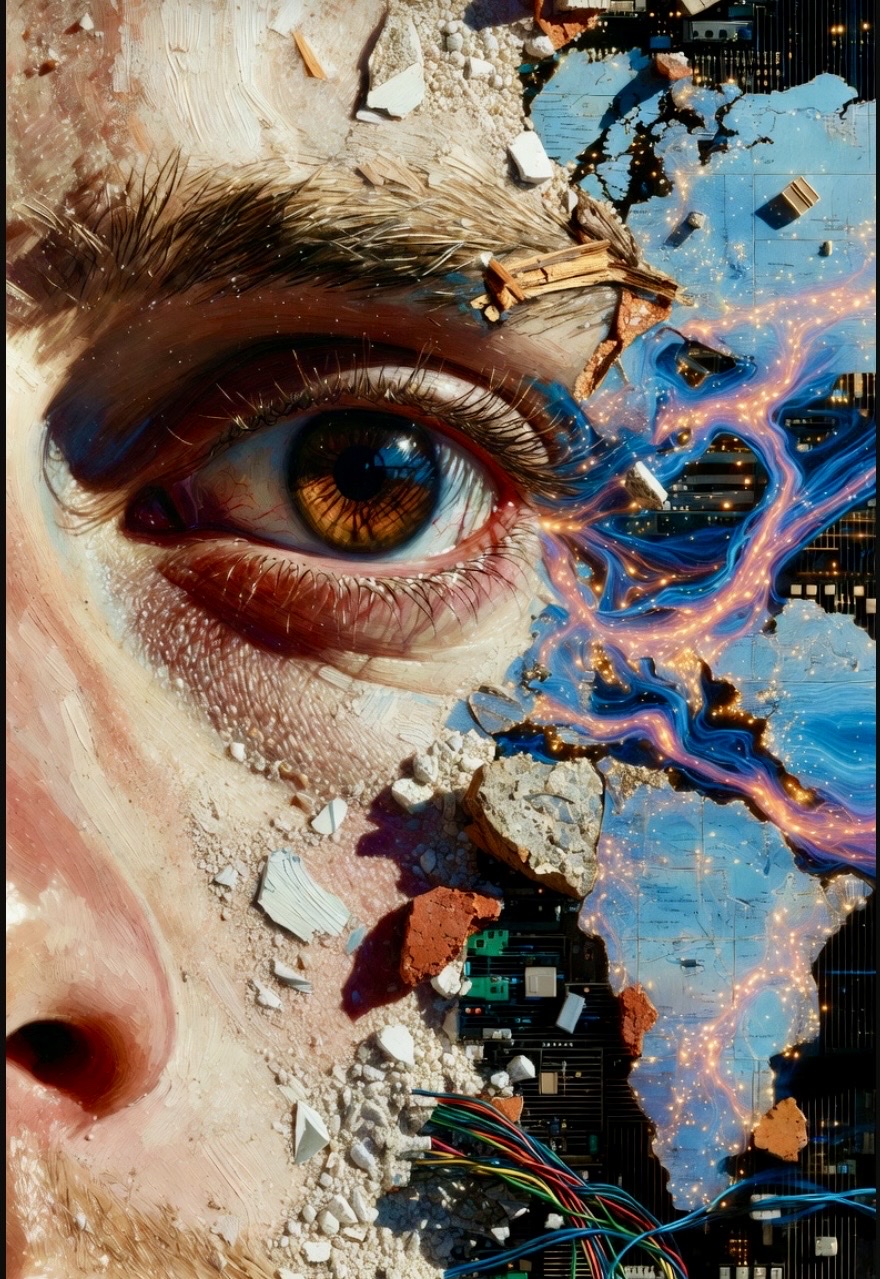
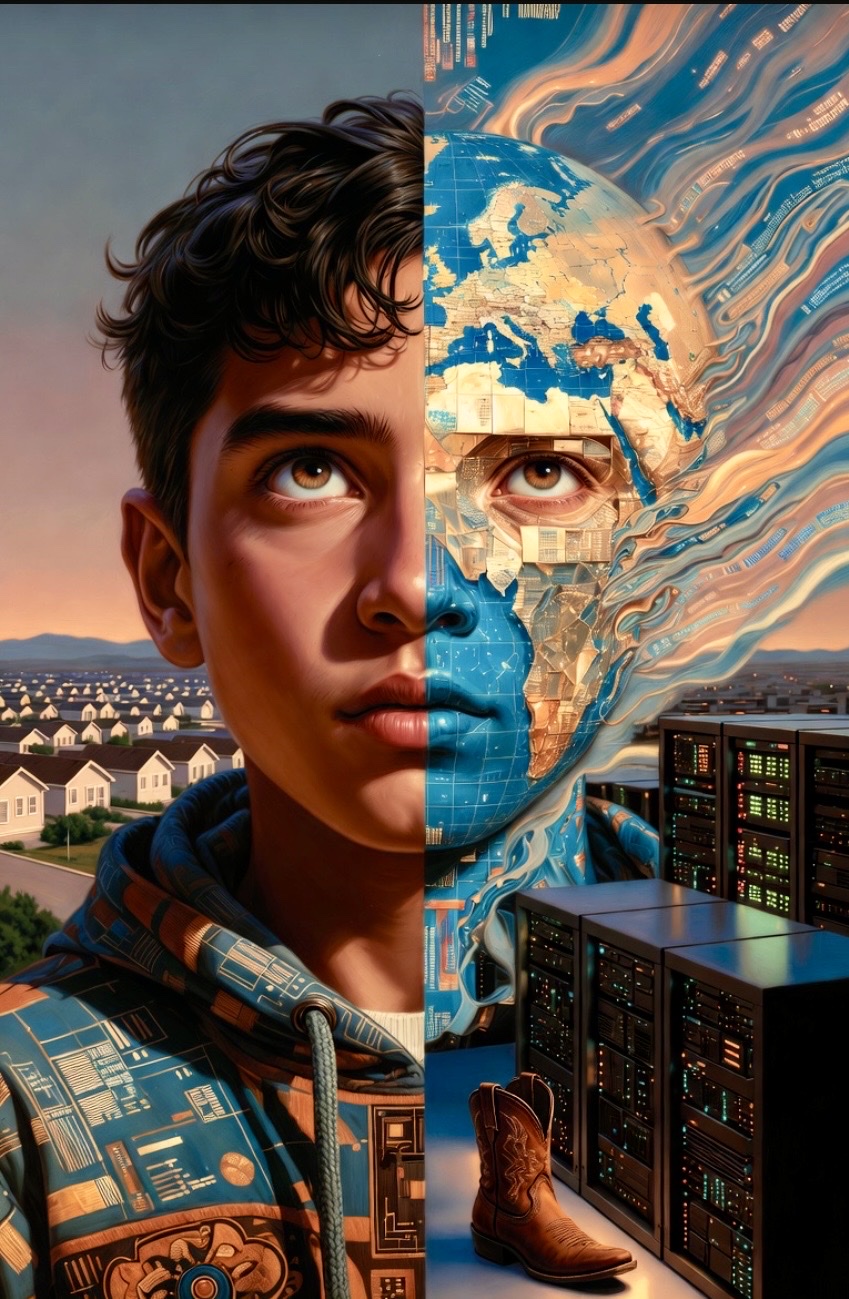
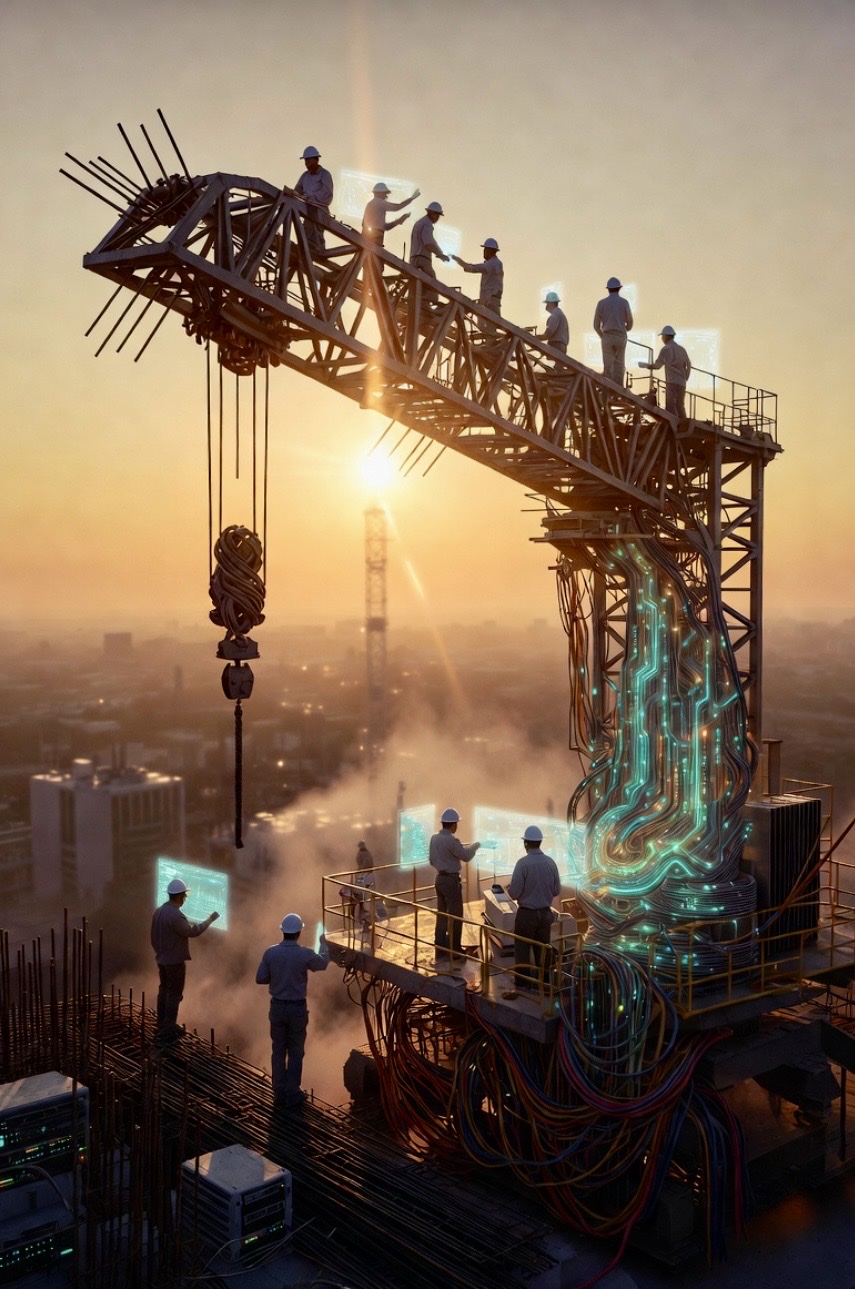
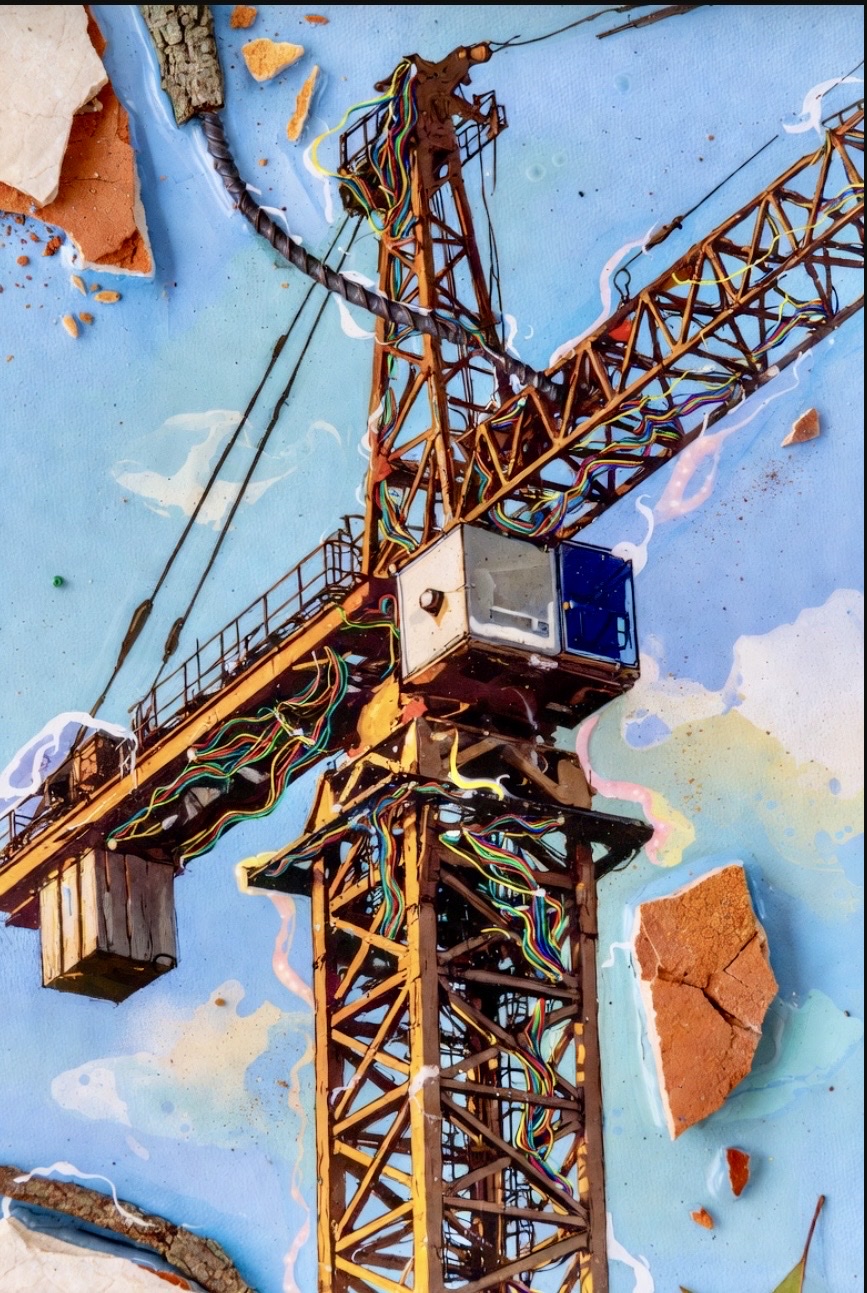
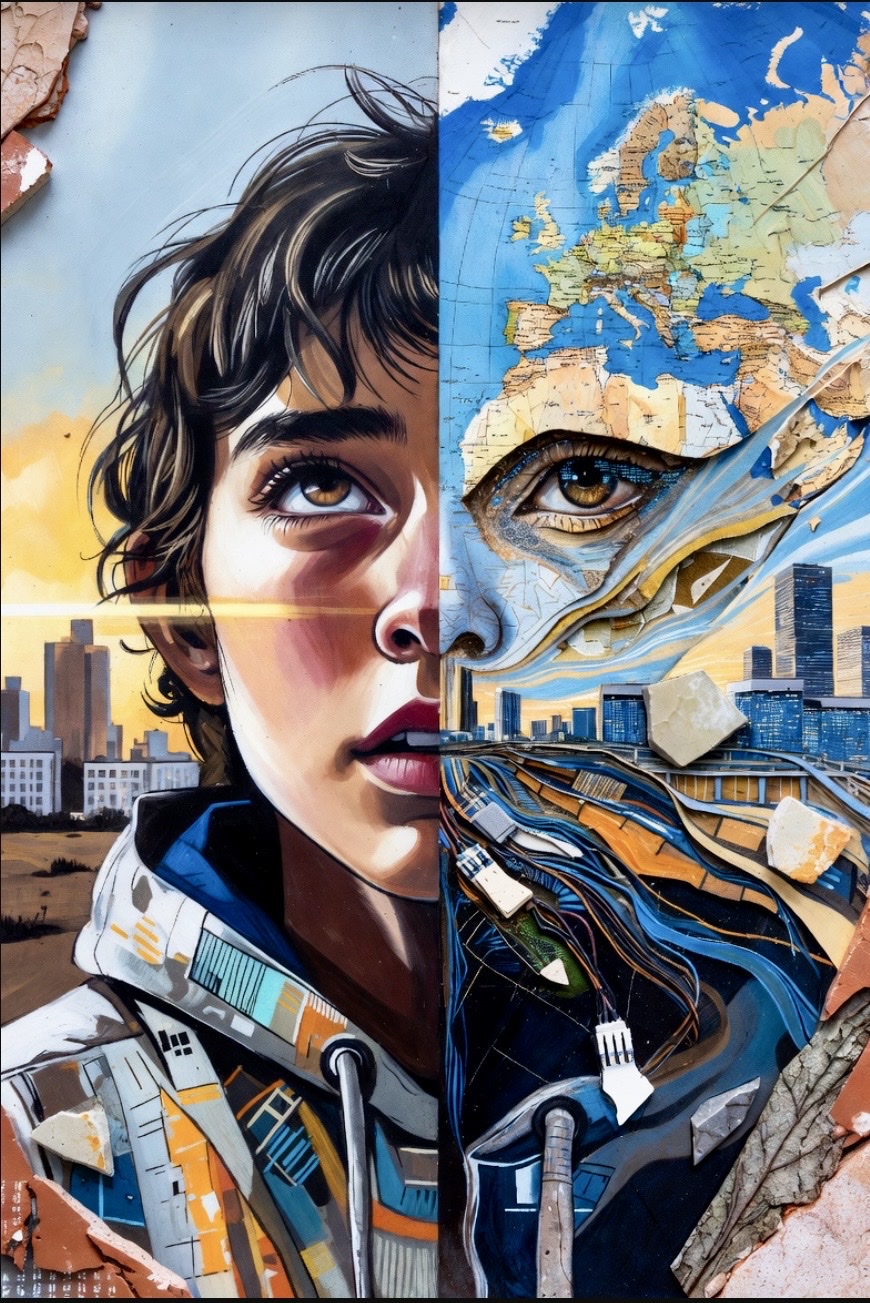
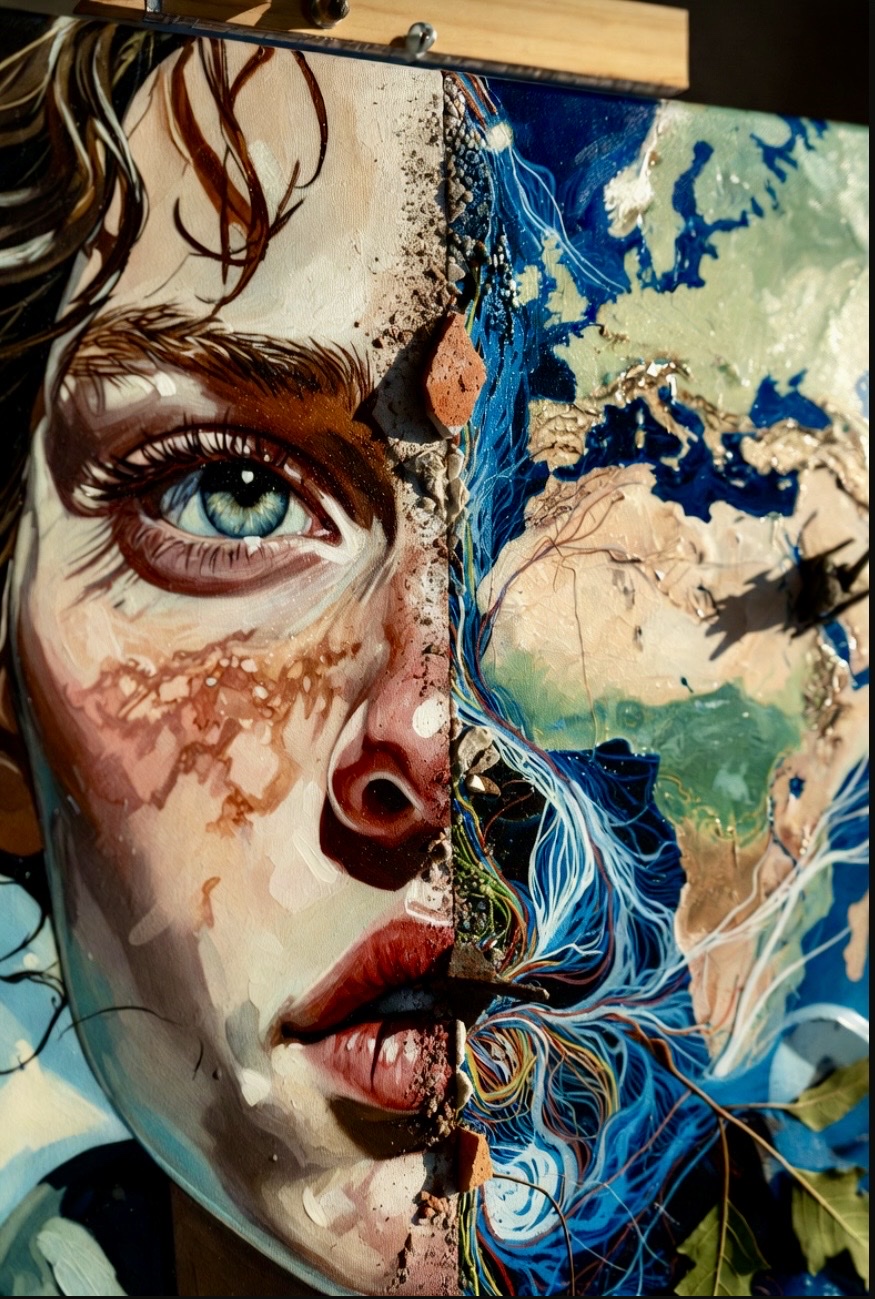
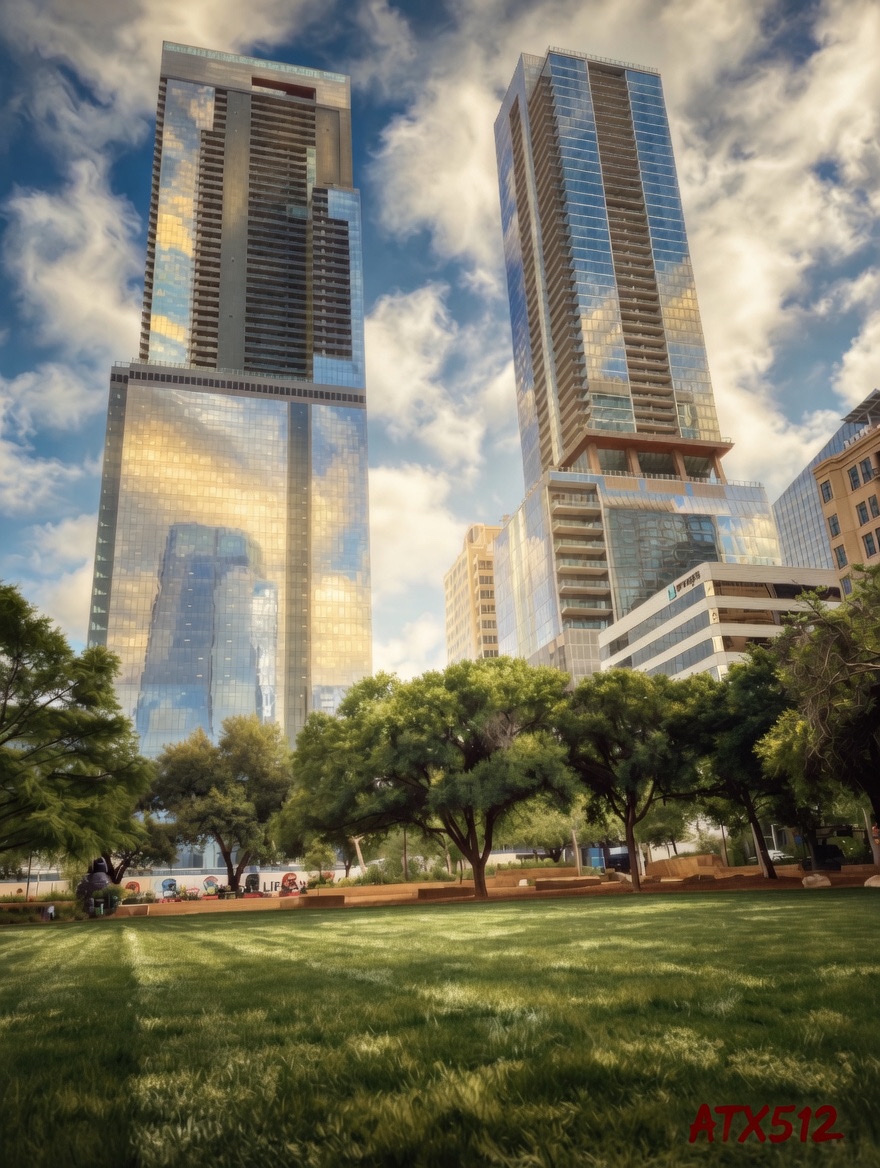
The AI / SI Symbiosis series asks what happens when machine vision and human sight have to share a city. In these paintings, cranes, brick, wire, and sky do not simply crowd the frame; they begin to think. A crane learns a horizon. A wall grows a nervous system. Two faces of the new city look at each other and cannot tell who arrived first.
The series does not treat artificial intelligence as a villain or a miracle. It treats it as a neighbor that has already moved in. Silicon and instinct, code and grief, the engineered skyline and the body that still remembers a quieter street — they are already braided. ATX512's question is not whether the braid can be undone. It is whether anyone is still paying attention to which strand is human.
Warhol asked whether art imitates life or life imitates art. That question has grown a third partner. Machines learn from human culture, people emulate the machines, and science sits at the table with both. ATX512 lives inside that loop, and uses the tools that remade Austin to remember what it was.


Three Acts
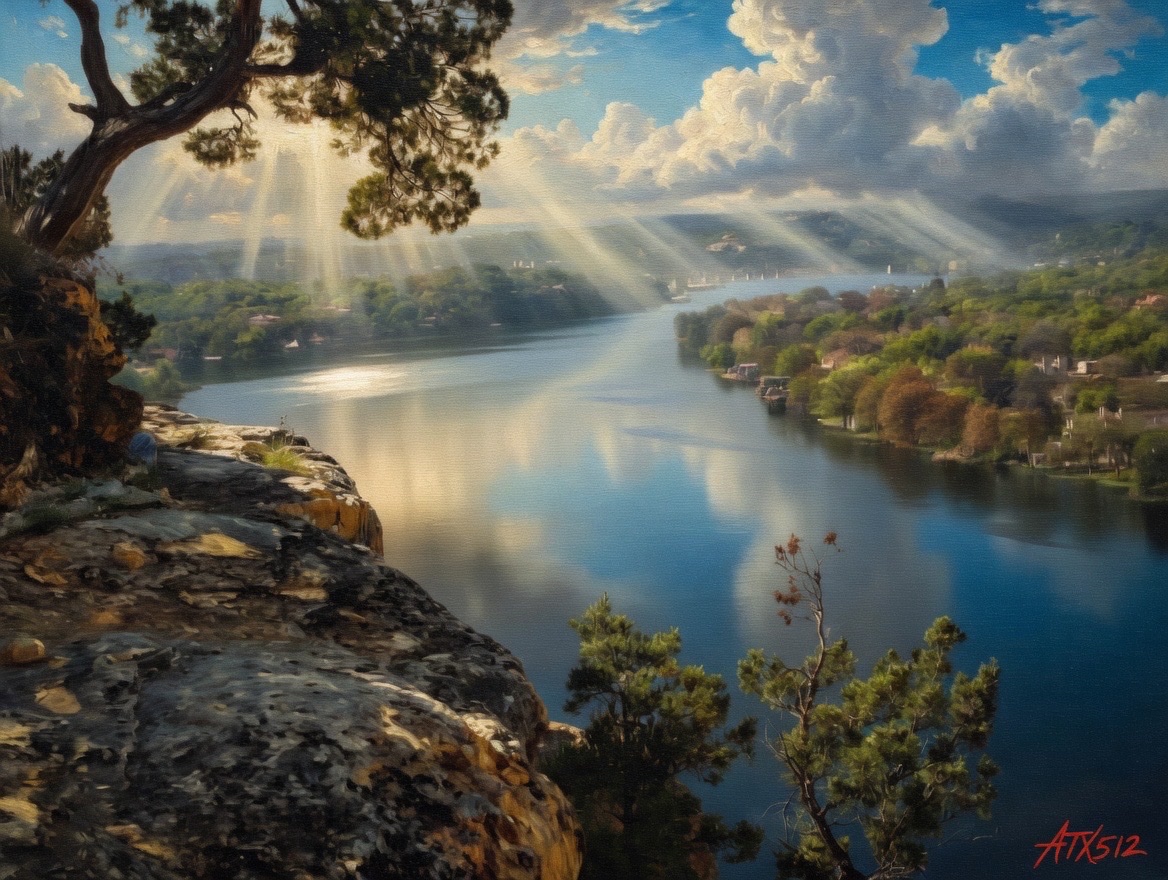
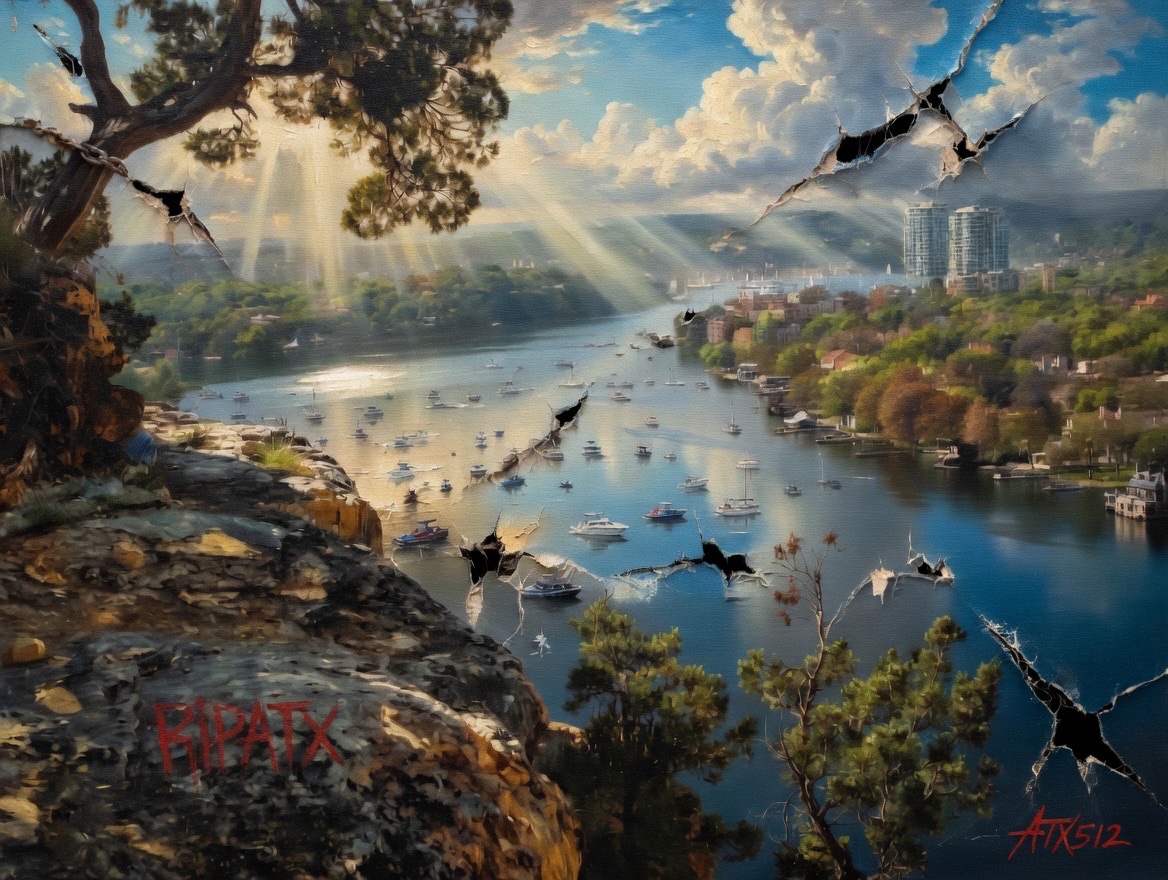
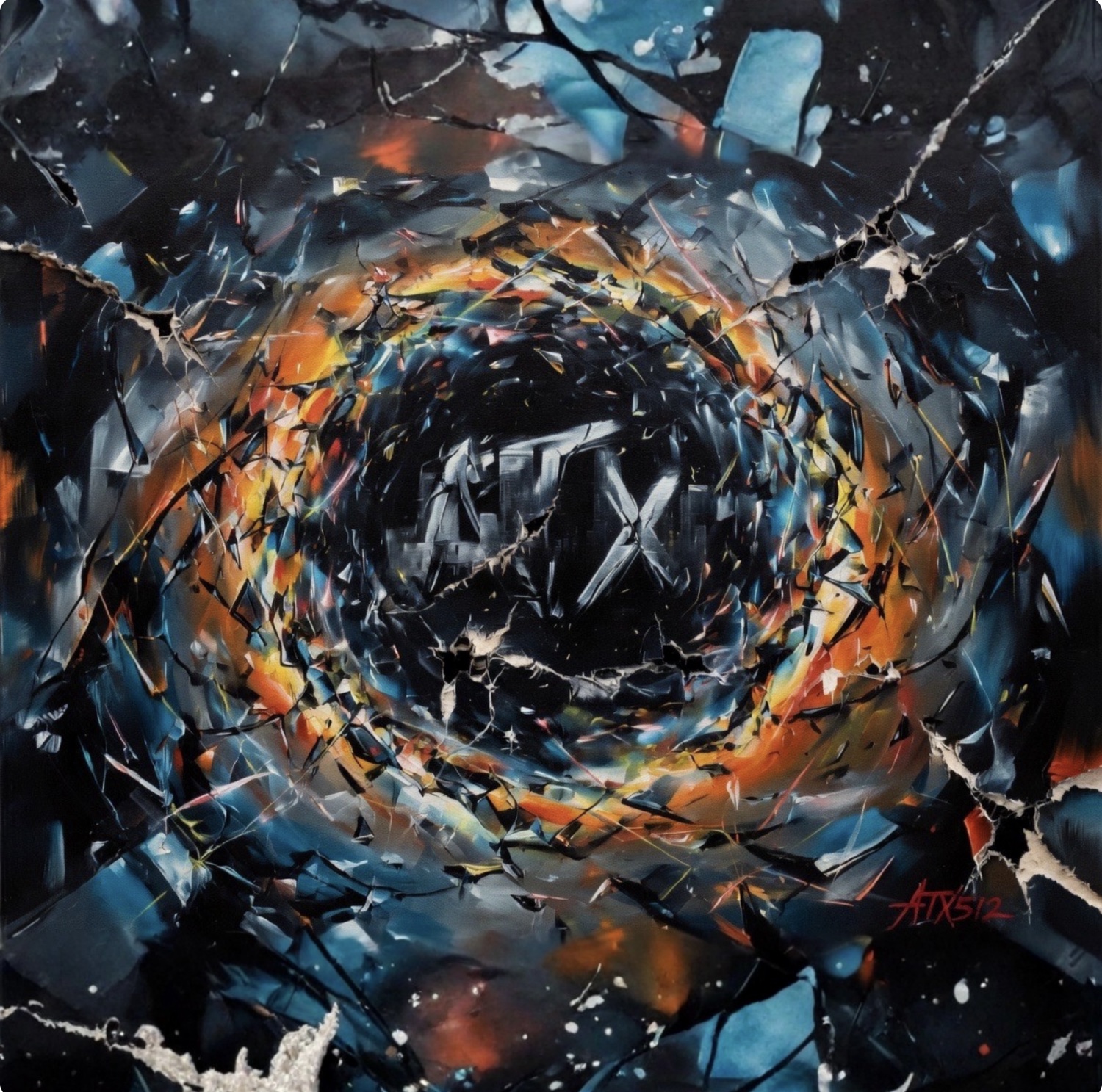
Every ATX512 triptych is one story told in three panels.
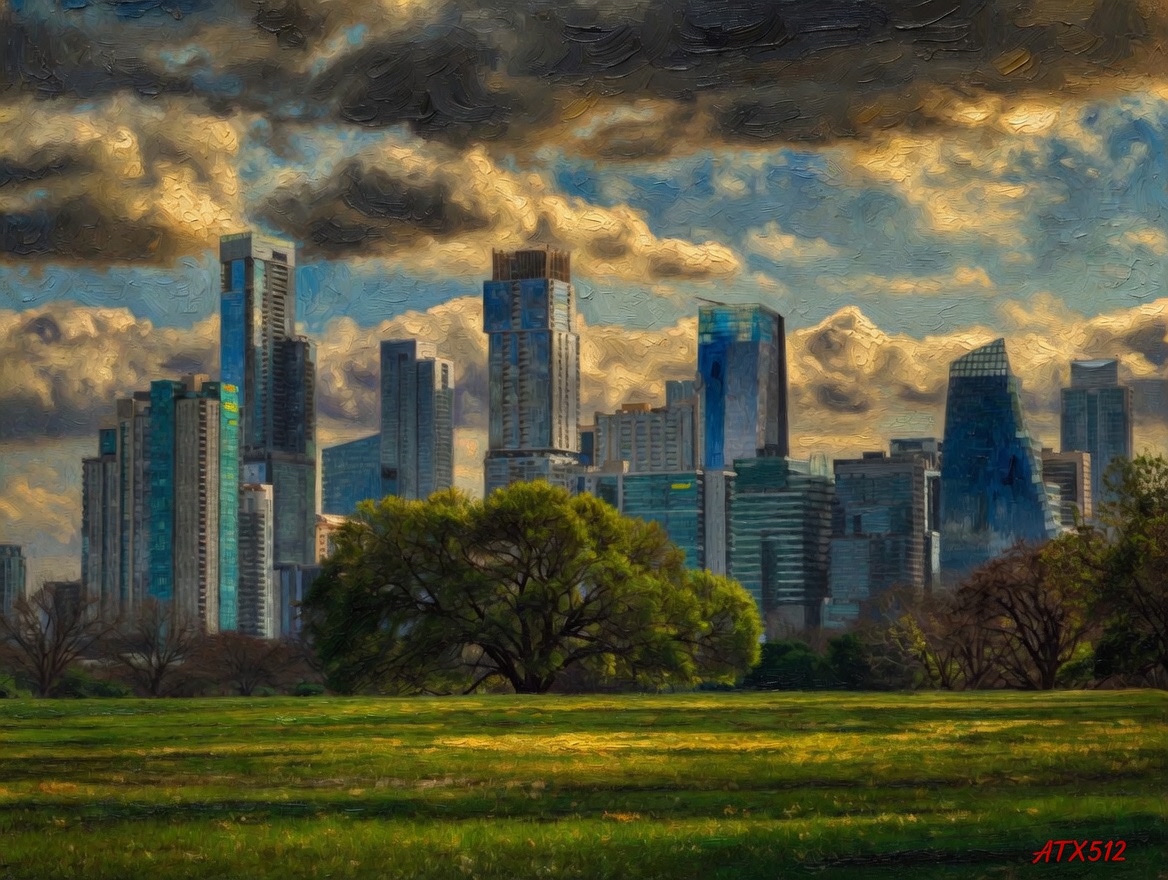
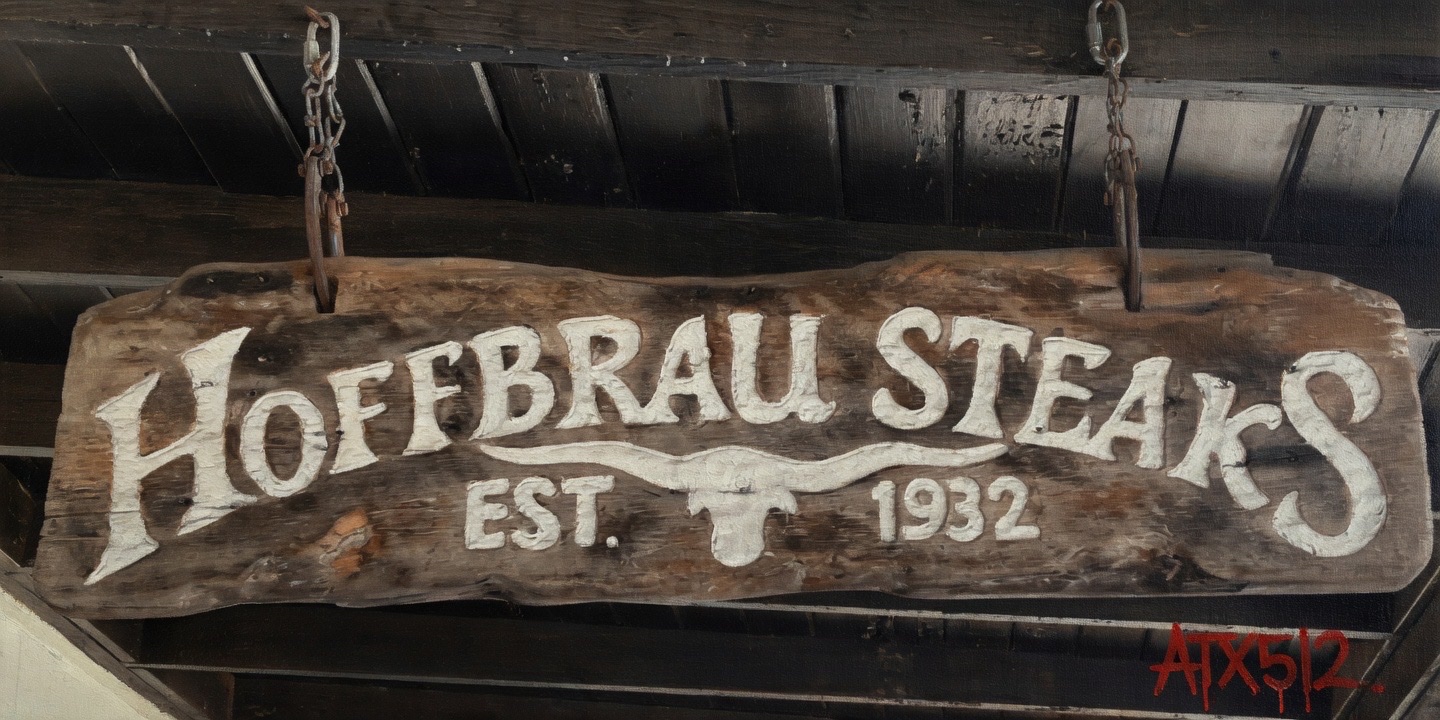
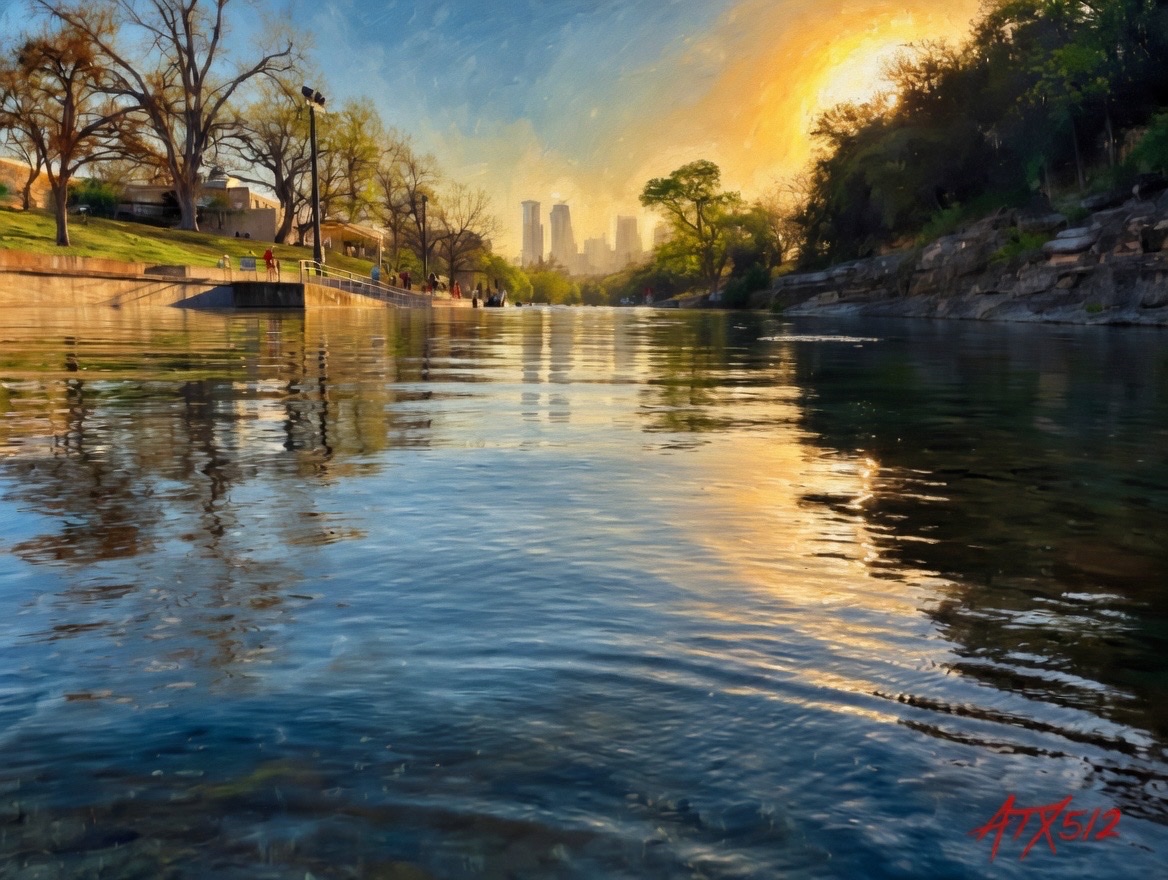
Panel 1: the landmark as we remember it, whole and unhurried.
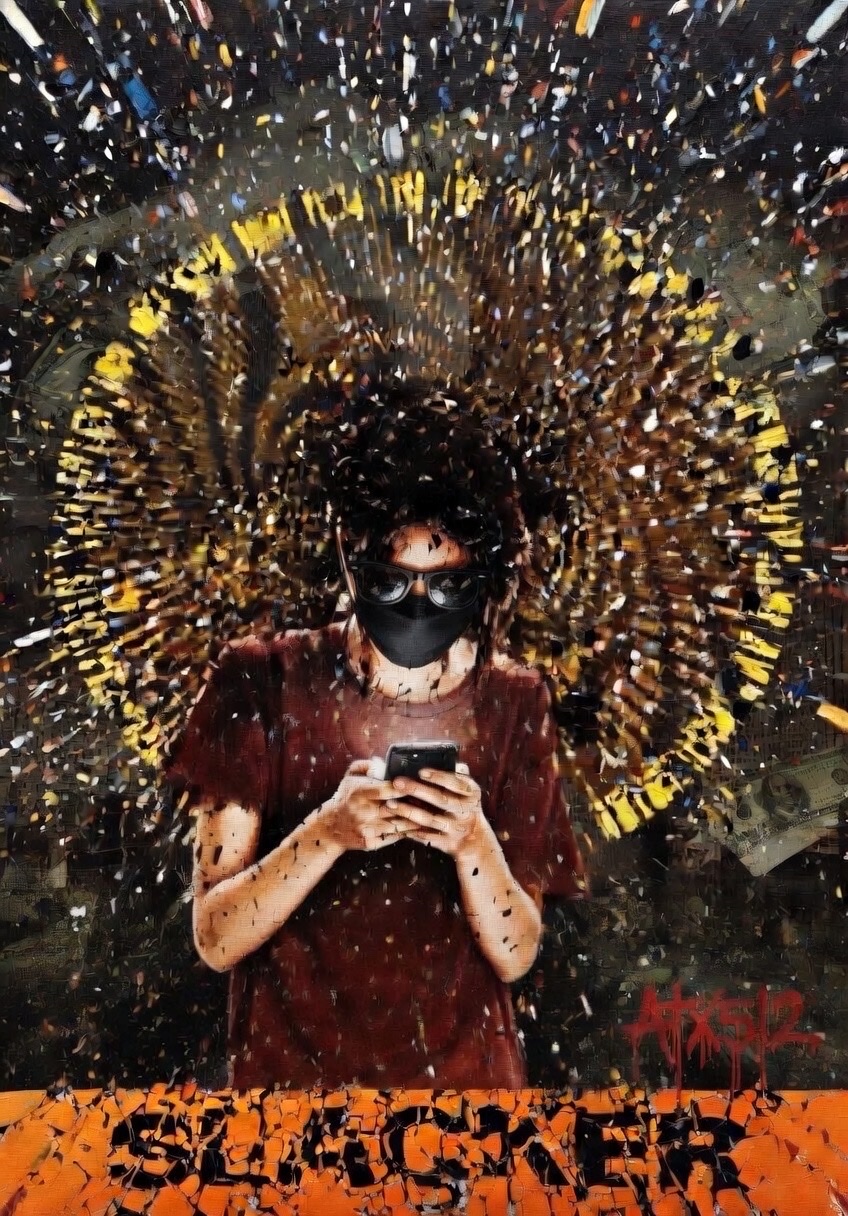
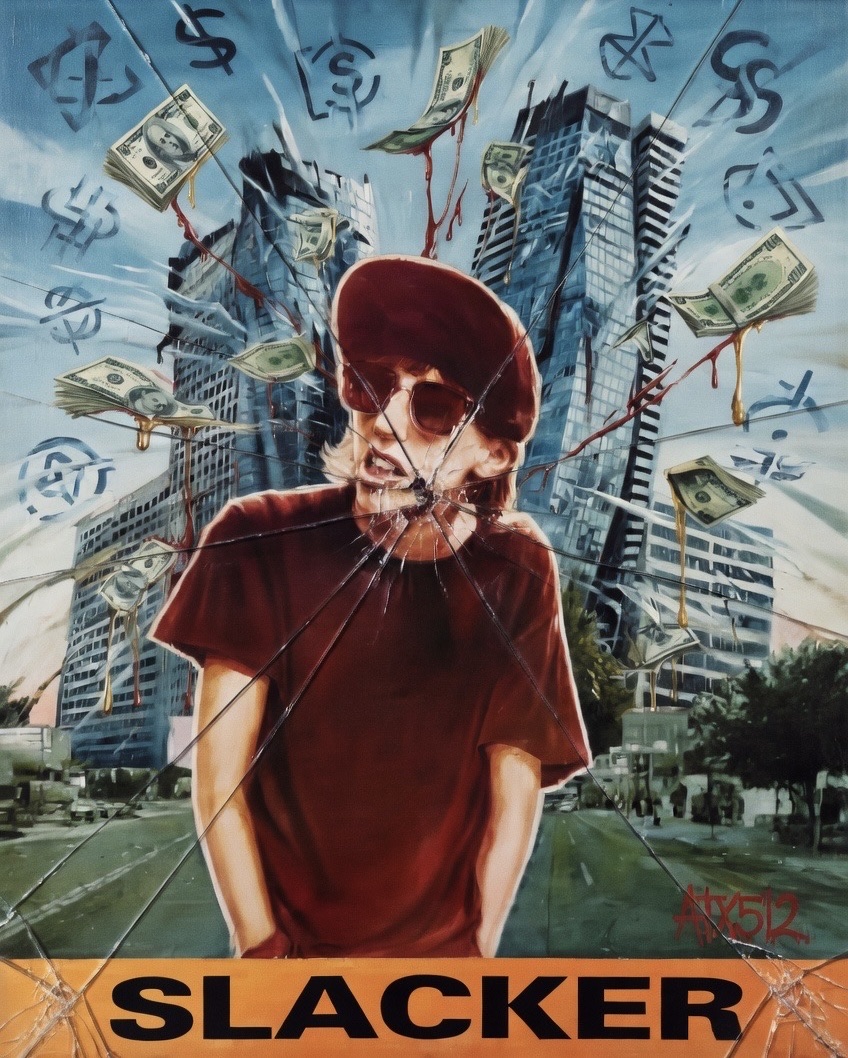
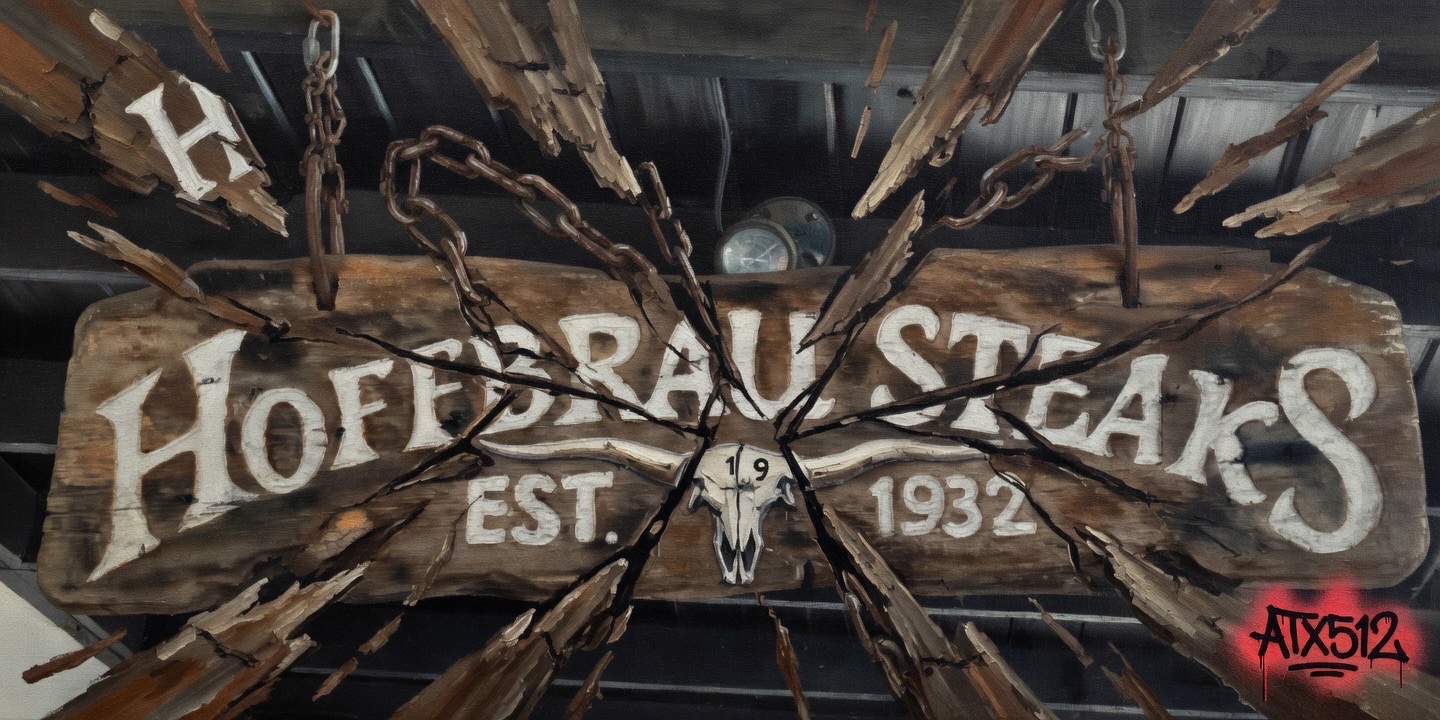
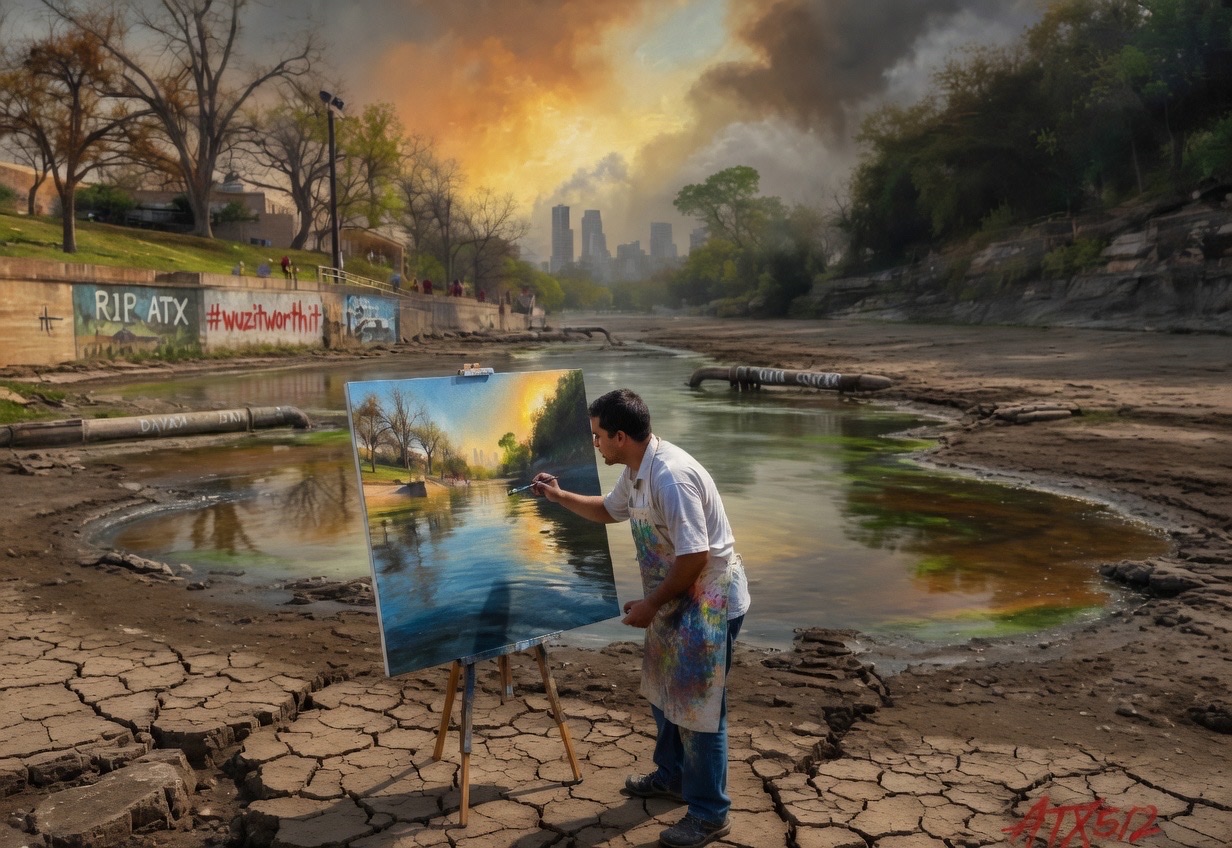
Panel 2: the break. Knife cuts, tears, graffiti, cranes on the hillside.
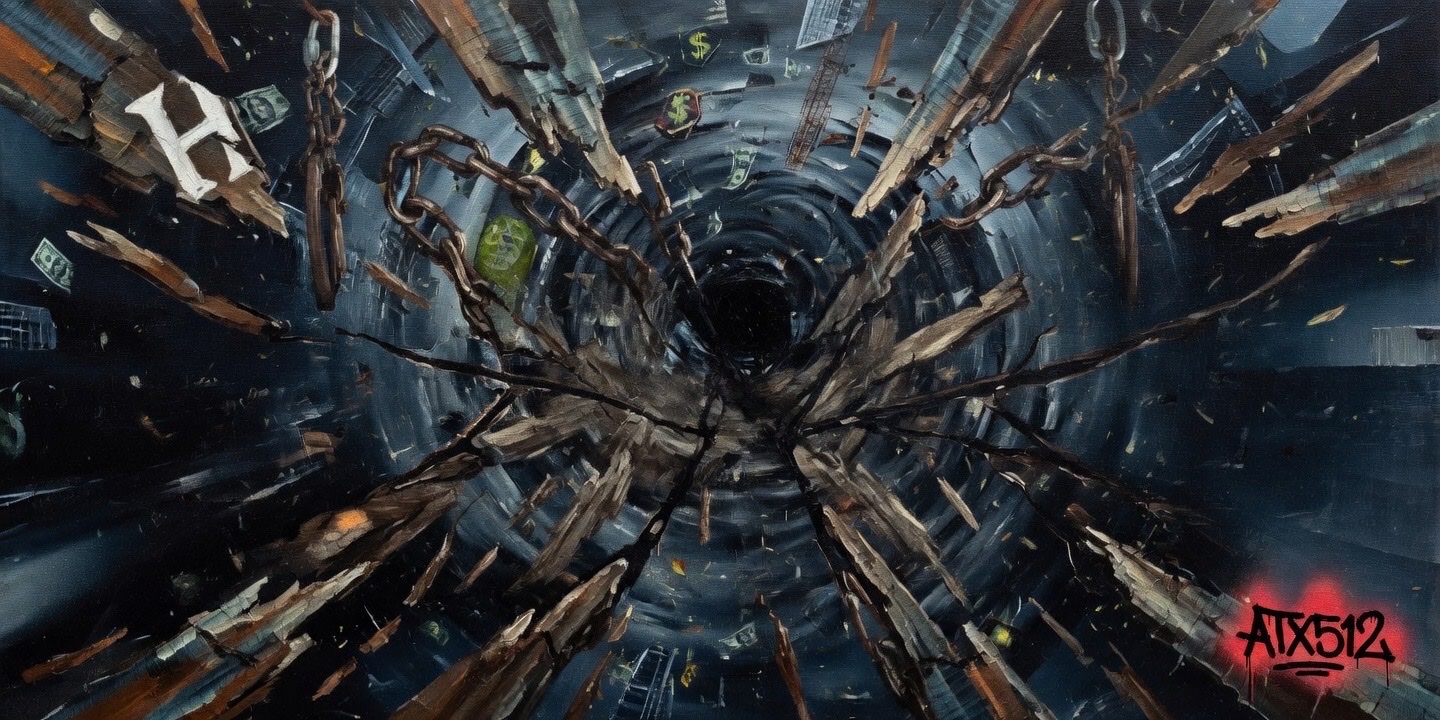
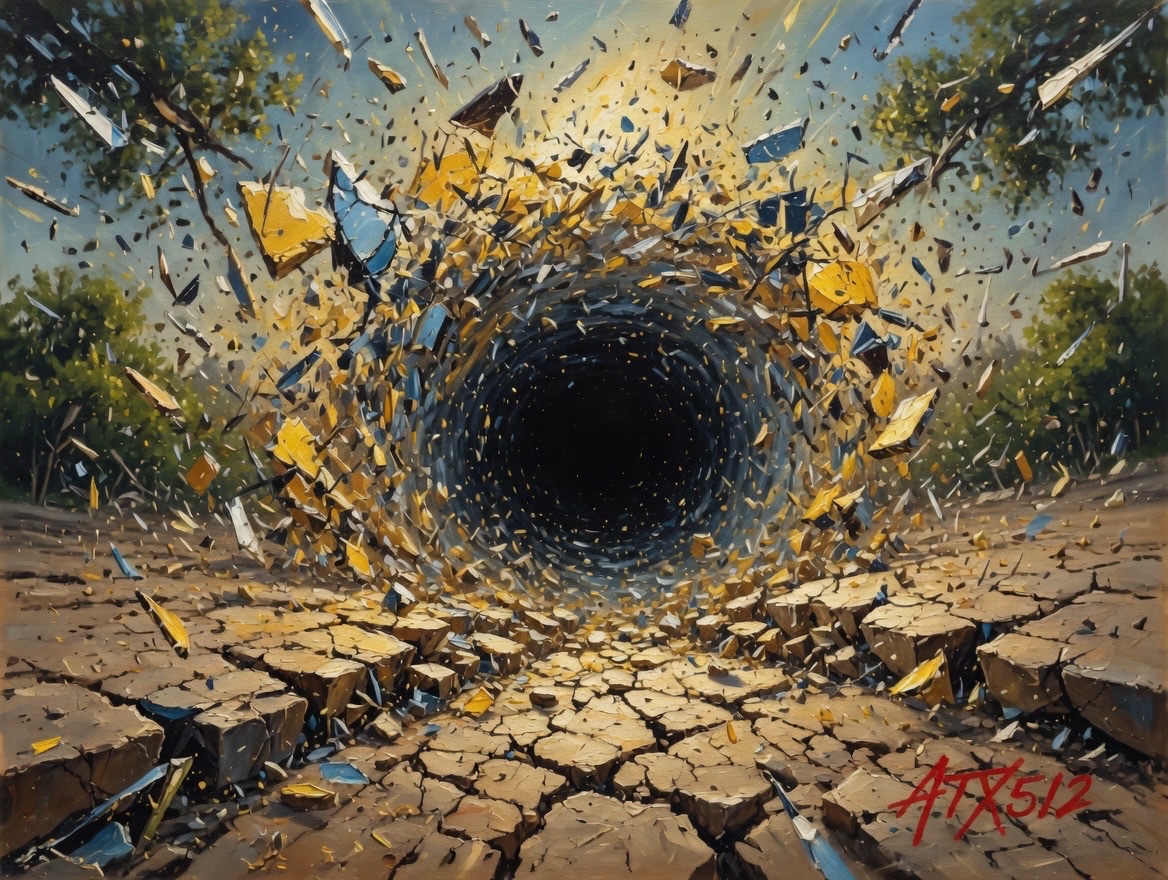
Panel 3: dissolution. The landmark shatters into glass and light, and only a faint "ATX" survives in the spiral.
Read each row left to right.
Exhibited, Not Sold
Some works are shown here as part of ATX512's inquiry into a changing city, but they are not offered as prints. They depict existing murals, signs, or graphic sources whose rights belong to others. Austin Fusion Art Gallery exhibits them for context and conversation, and does not sell them.


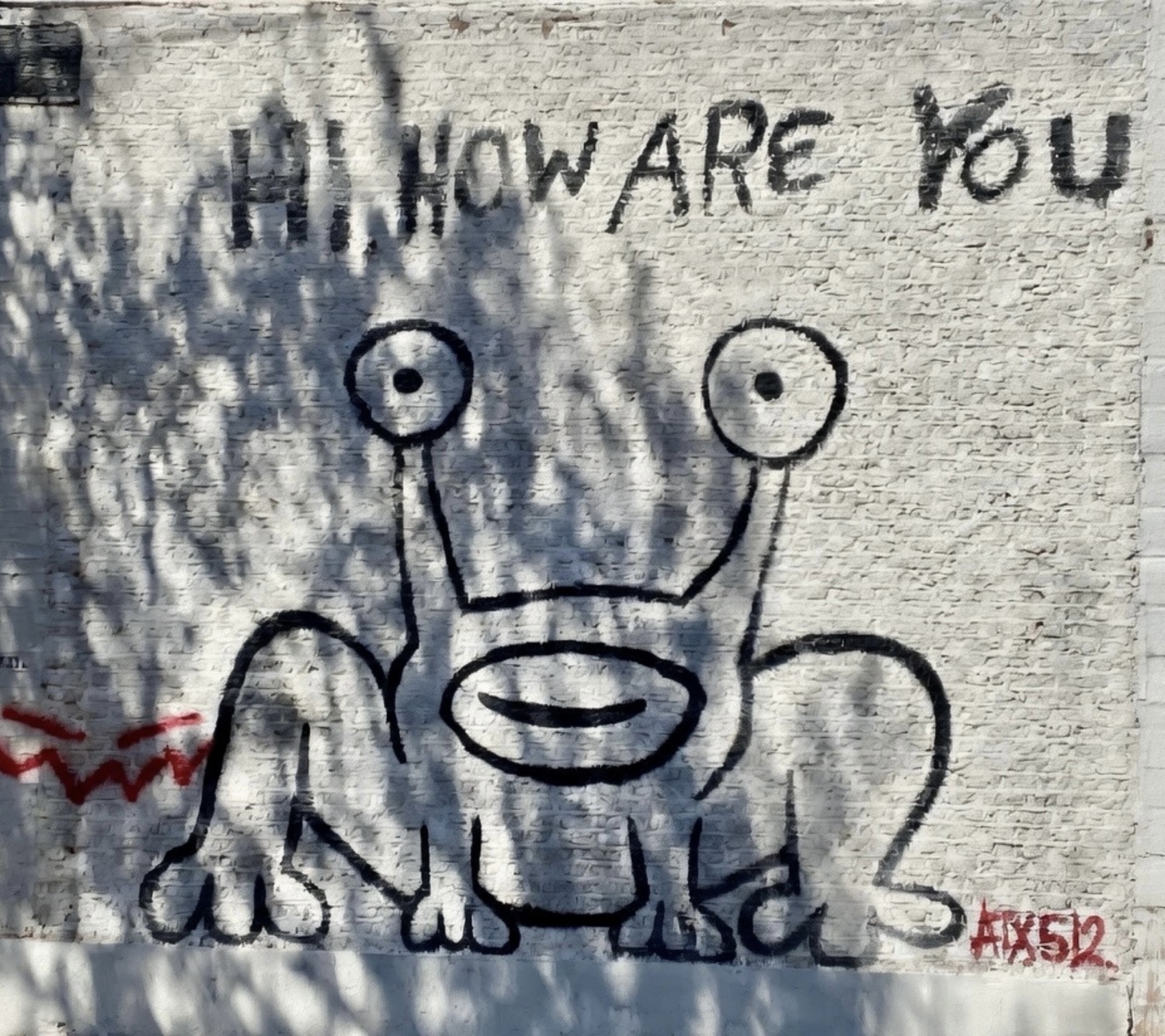
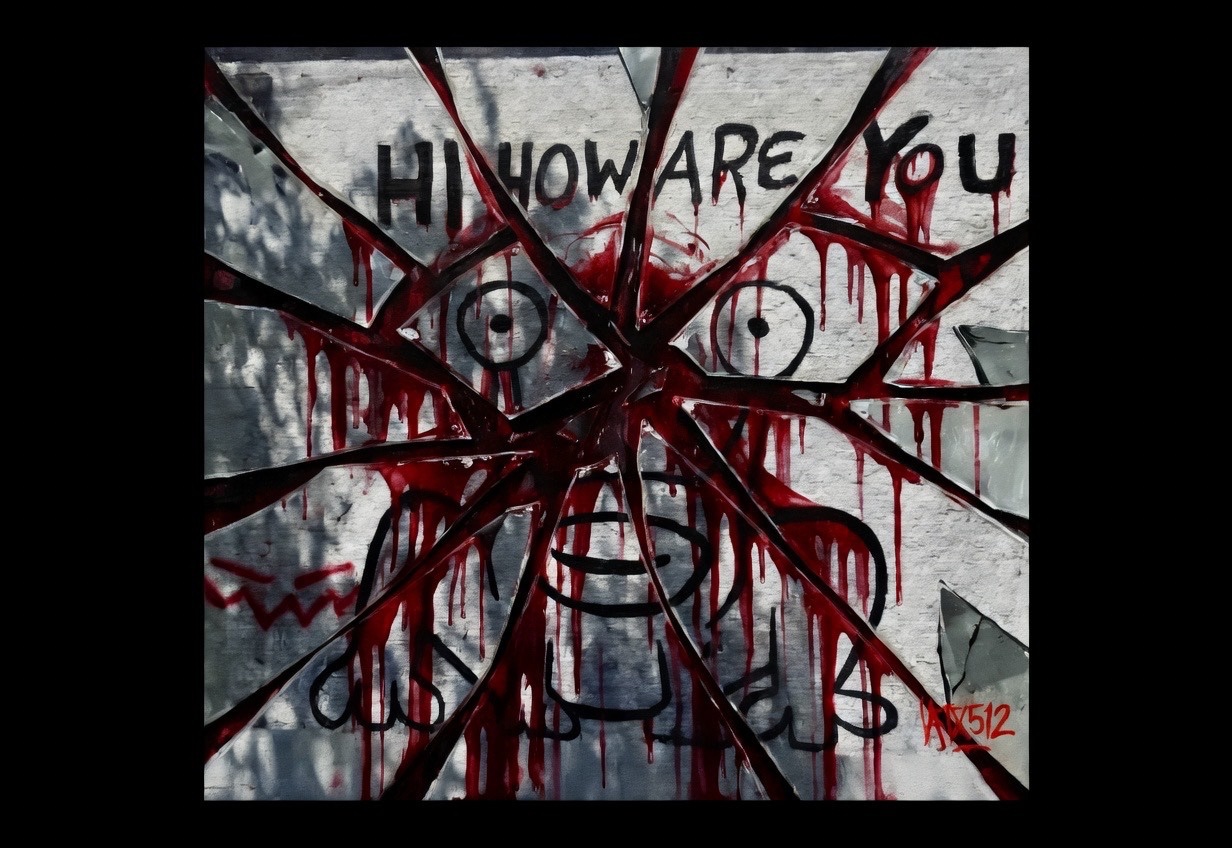
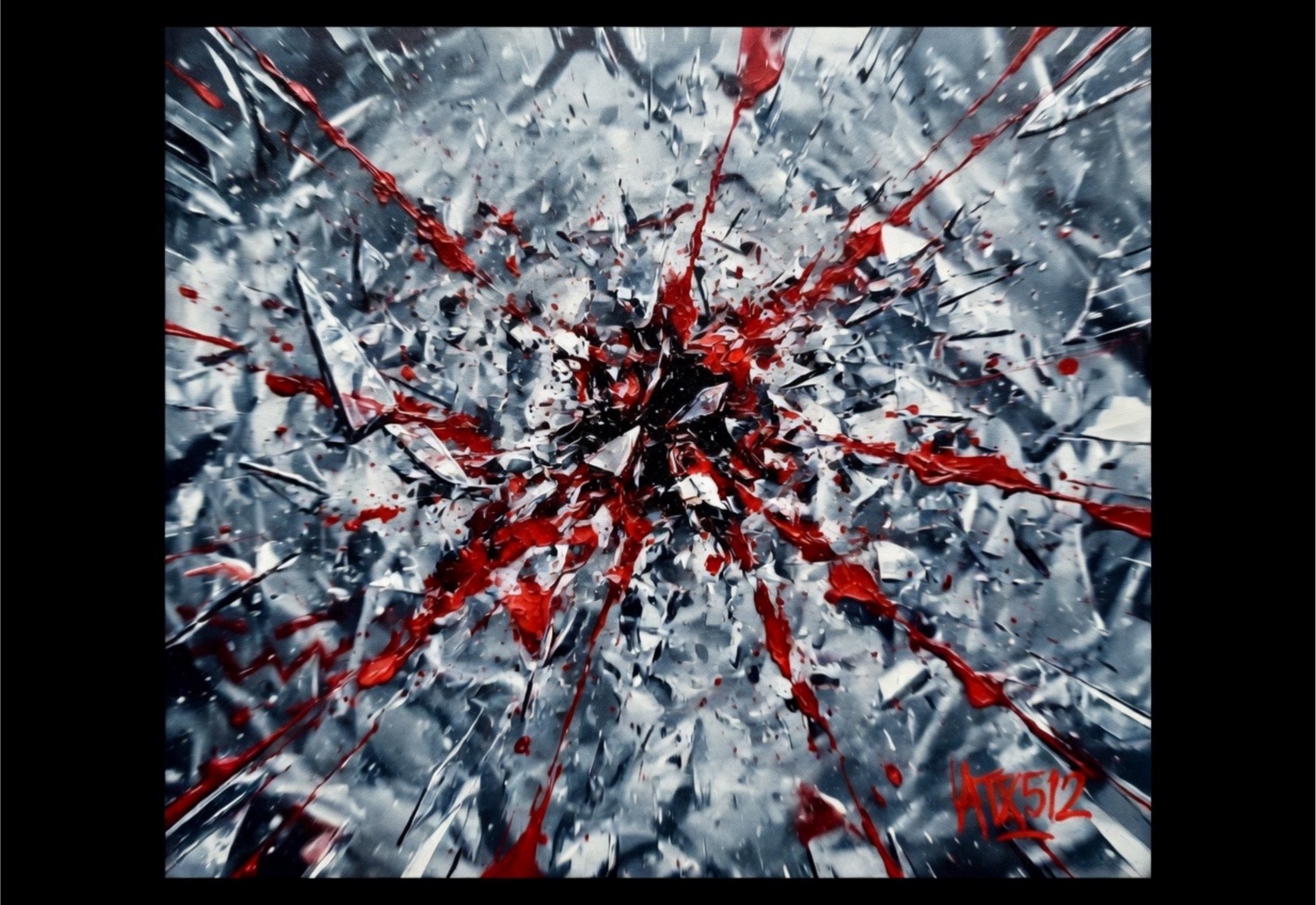
Hi, How Are You. Daniel Johnston's frog, Jeremiah the Innocent, the street-art soul of old Austin. Pure, then cracked and bleeding red, then nearly gone.
Hoffbrau. The weathered steakhouse sign on West 6th, a local business displaced by downtown development, splintered into chains and dollar bills.
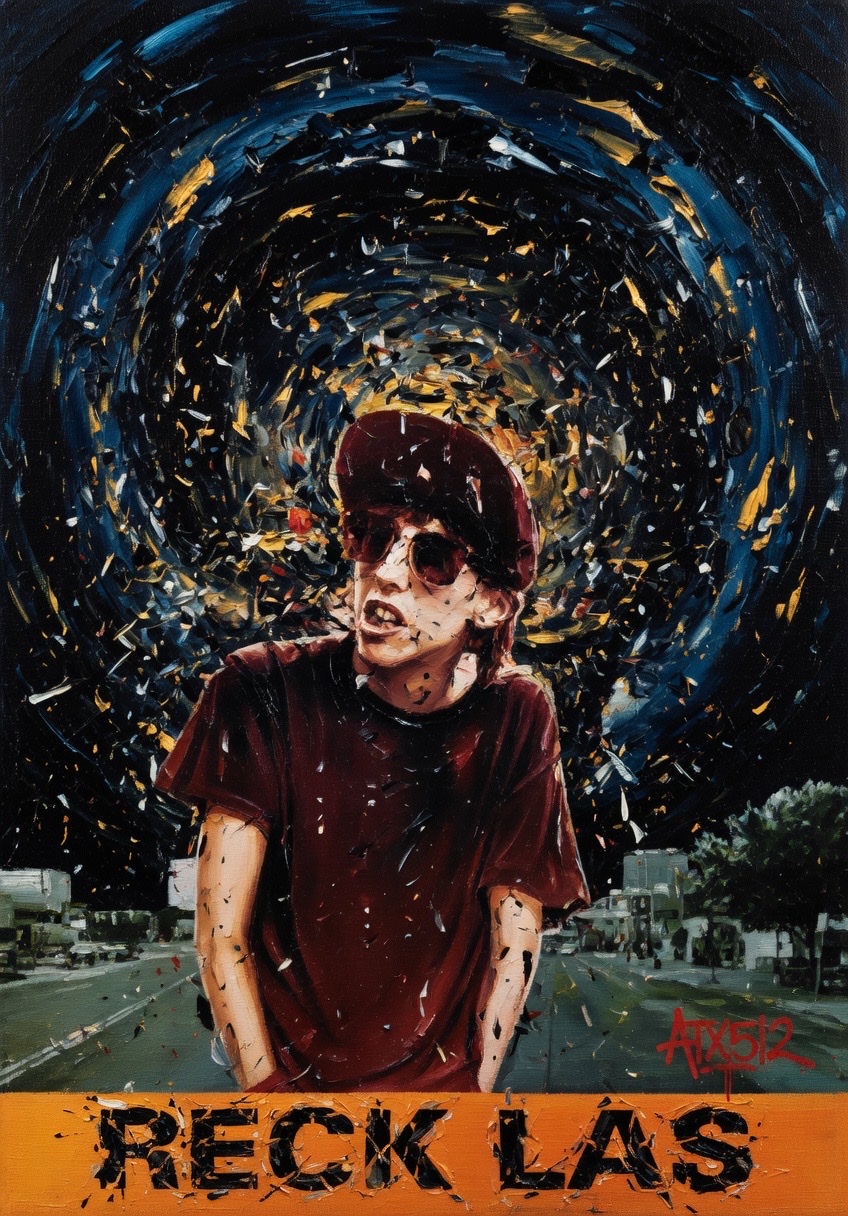
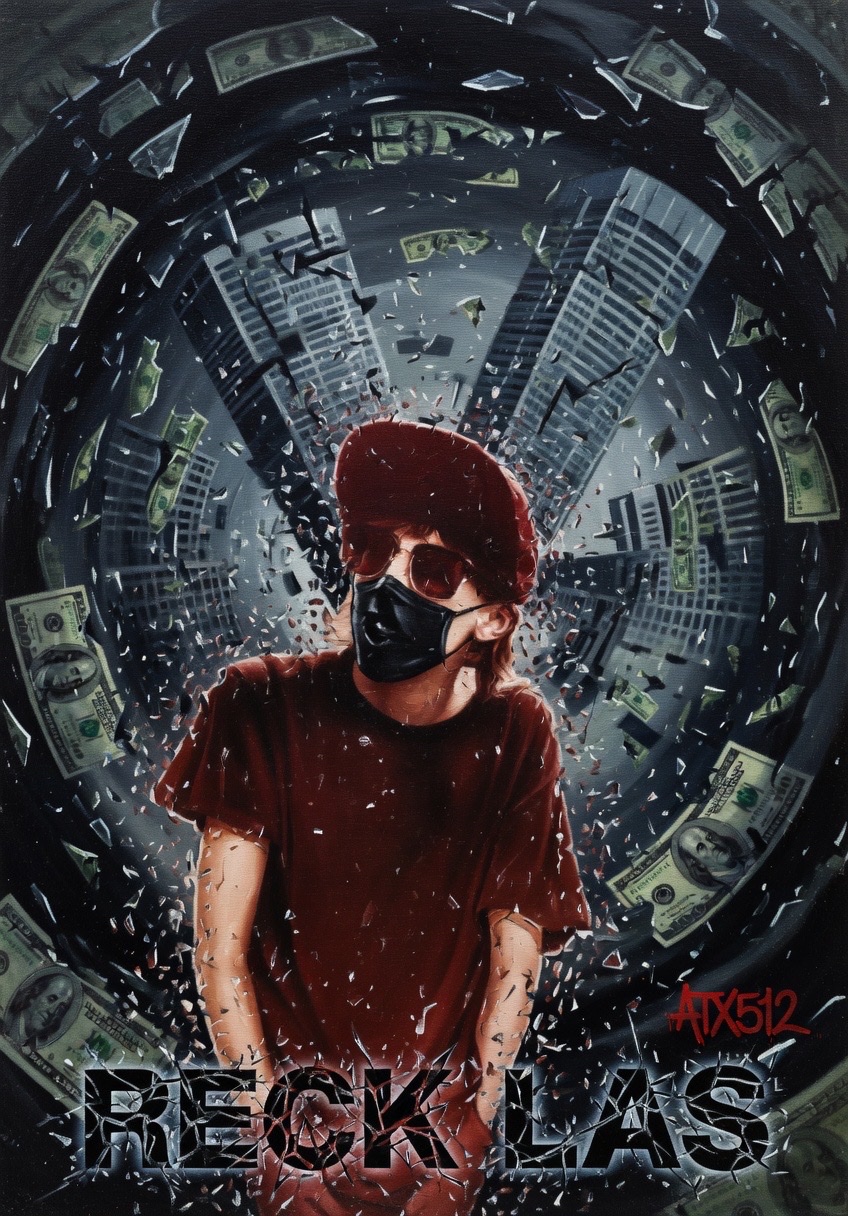
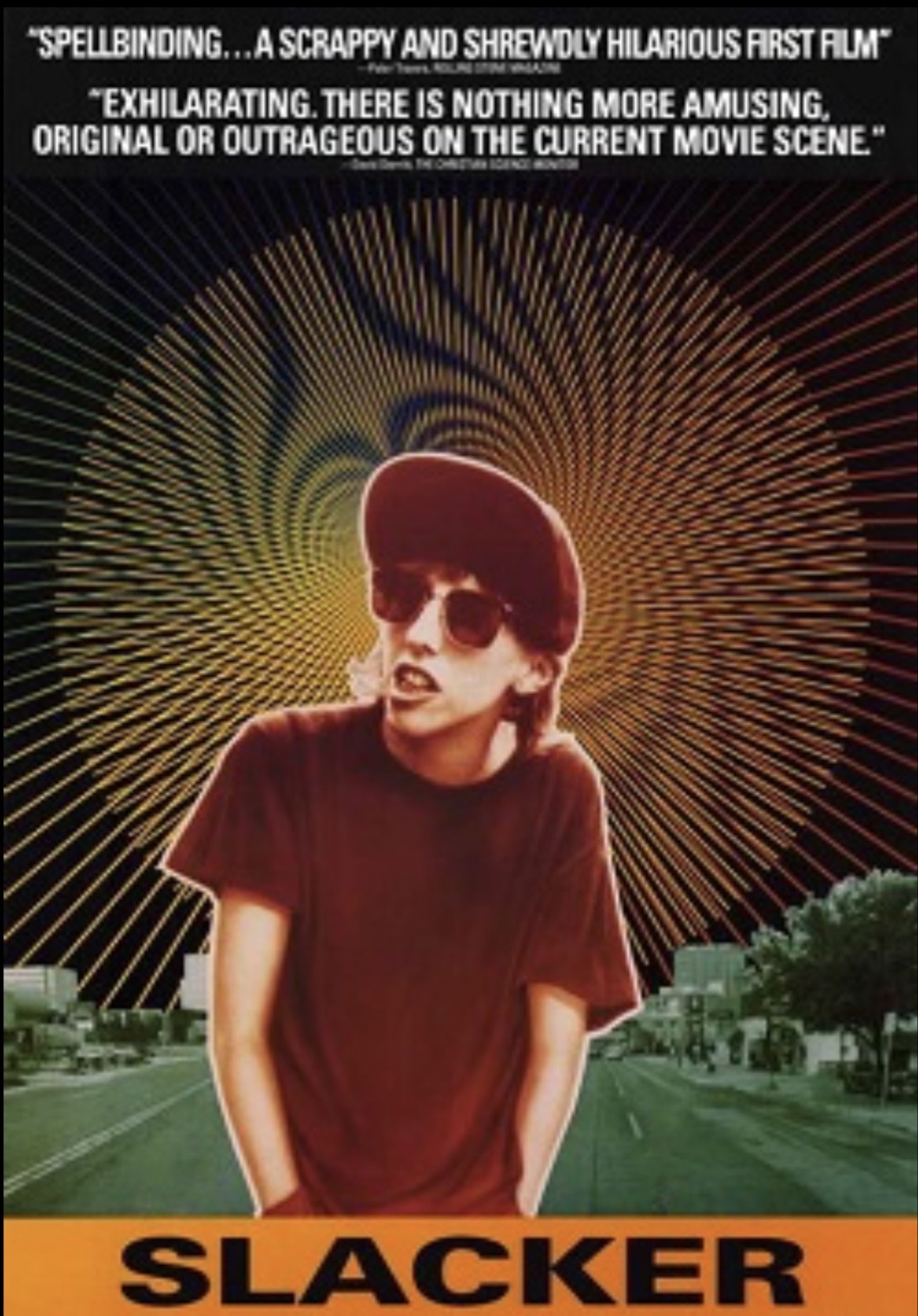
Slacker. The 1991 film that captured Austin's slacker, anti-establishment spirit, distorted by corporate intrusion and finally swallowed by the vortex.
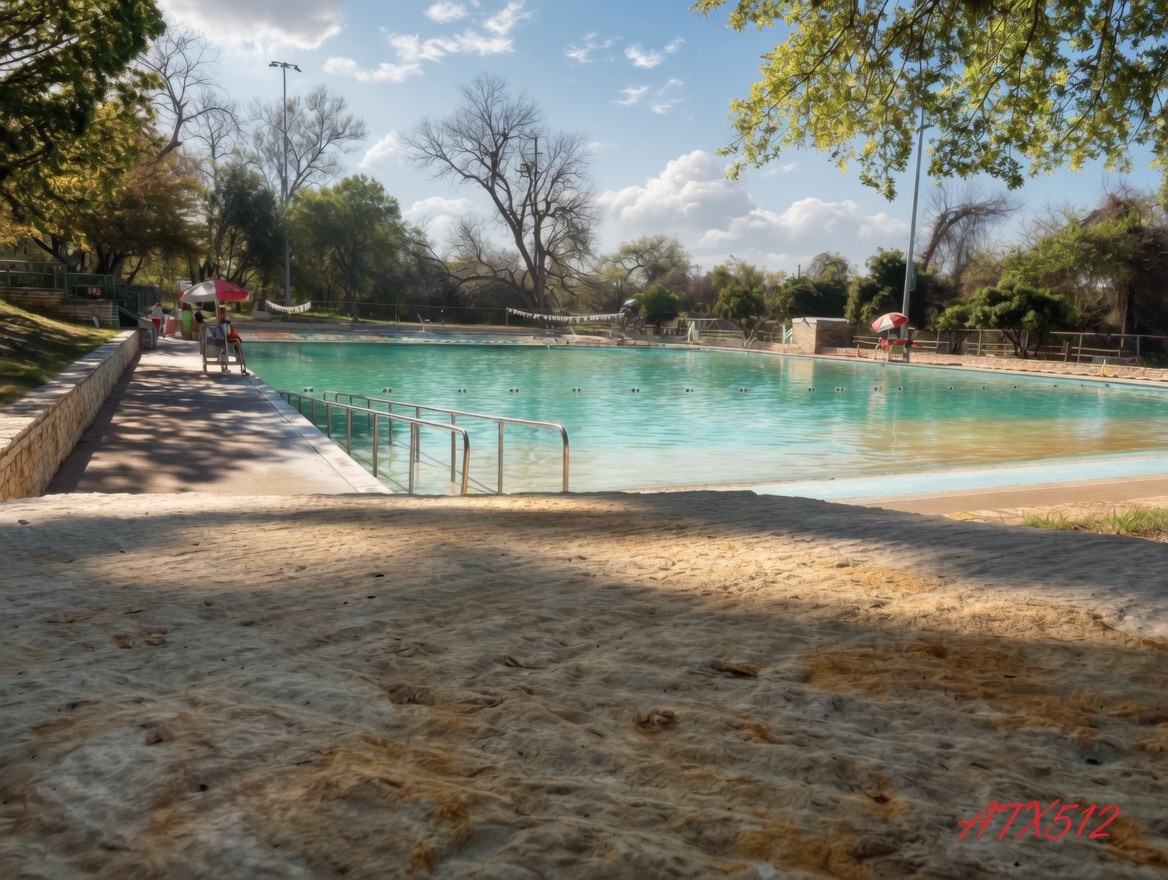
Barton Springs. The city's crown jewel, painted in a romantic Bierstadt light, then drained, polluted and tagged "RIP ATX," then shattered.
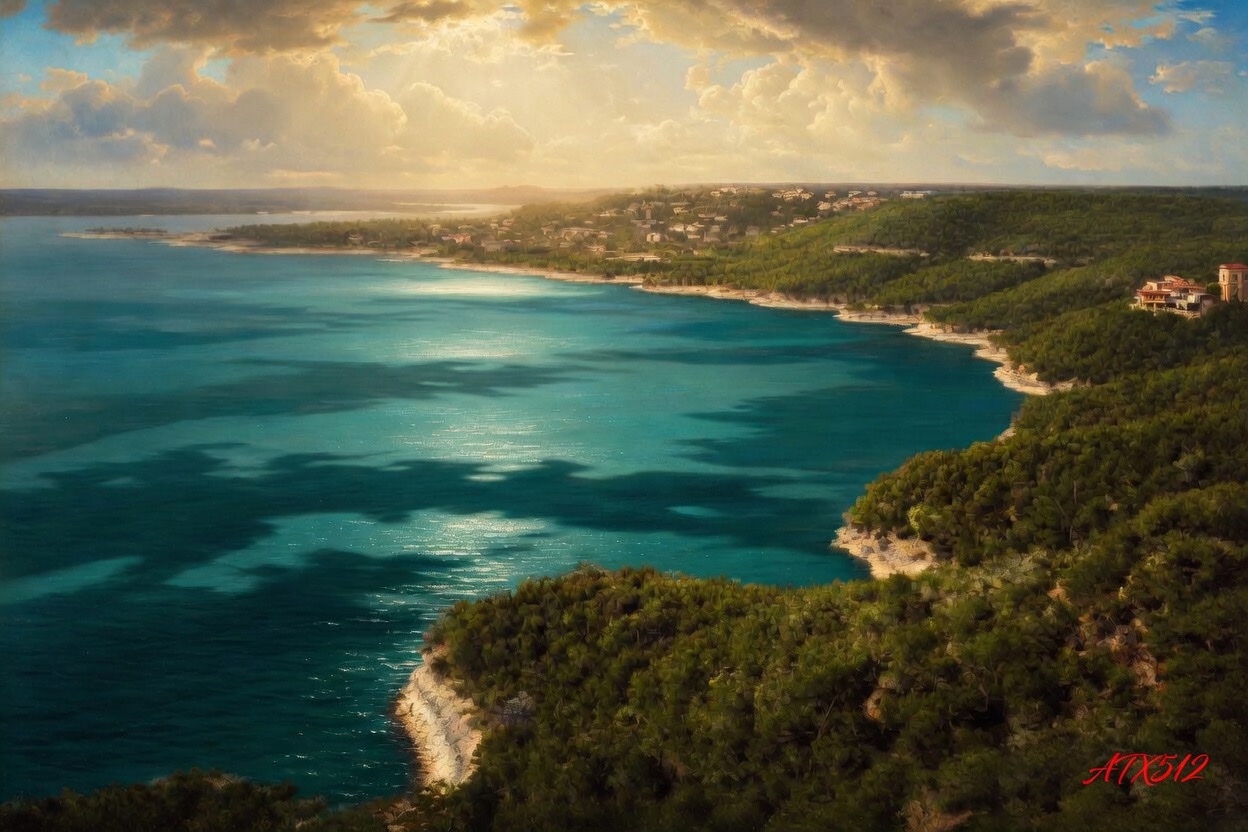
Mount Bonnell. The view from Austin's highest point as it looked 200 years ago, then stabbed, crowded and chained, then pulled into a spiral of glass where only a ghost of the skyline remains.